

Trusting God On Mission
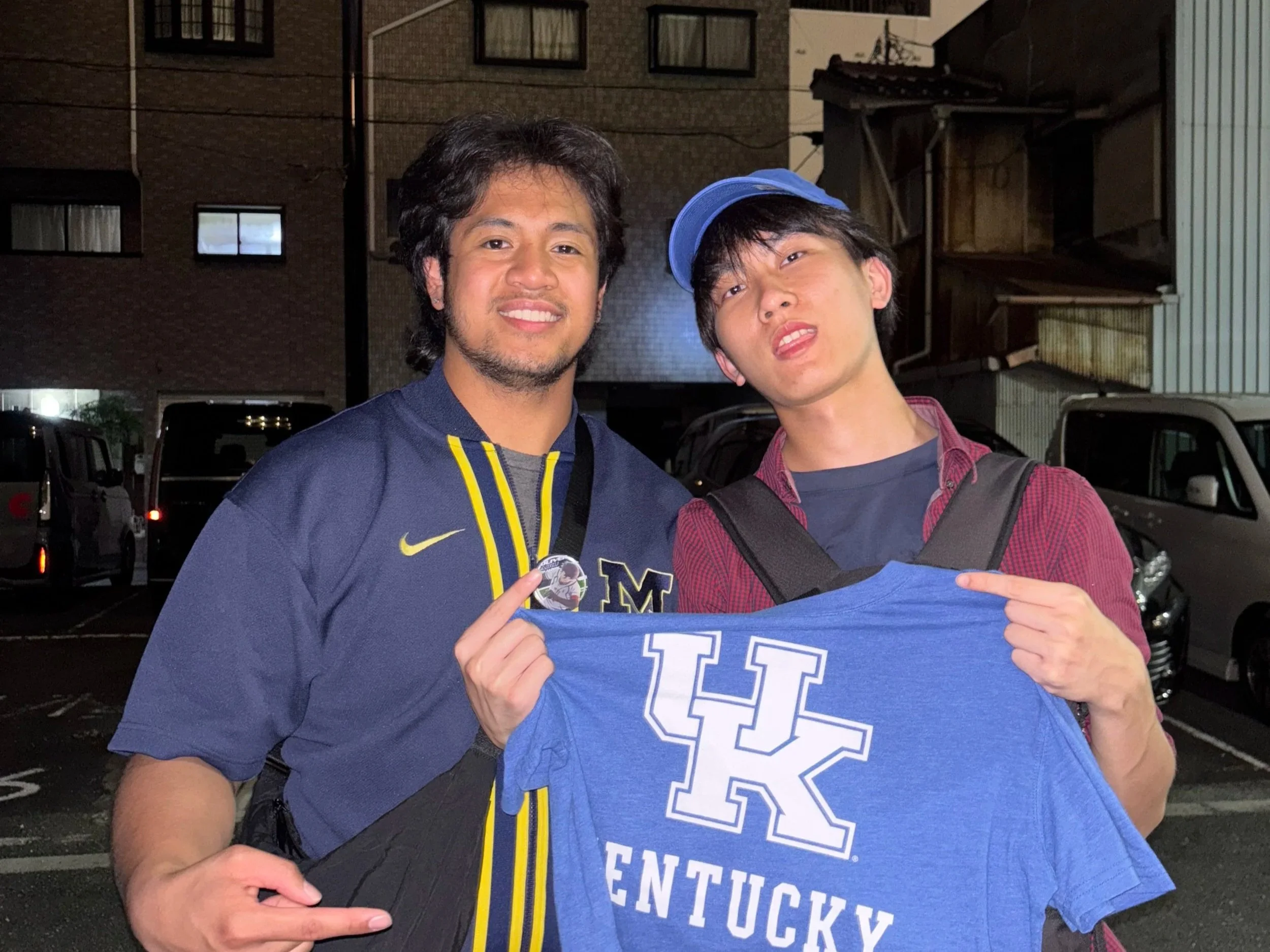
If you had asked Brei Panares a few years ago what his life would look like, the answer would have been straightforward: graduate school, build a career in nursing, stay close to family, and follow a path that made sense. That was the plan. But God rarely works within the limits of what feels predictable.
Today, Brei is preparing to move across the world—to Osaka, Japan—as a missionary. And while that might sound like a bold leap, the truth is more layered. His story is one of gradual surrender, unexpected moments, and a steady realization that God is not only calling him, but faithfully leading him every step of the way.
A Life Between Worlds
Brei grew up in Lake County, Illinois, as a first-generation American, the son of Filipino immigrants. His parents, both nurses, worked demanding schedules to provide for their family. “They were always trying to do everything they could so my sister and I could succeed,” he says.
That environment shaped him. Discipline and responsibility were simply part of life, and his family valued time together through travel. Between trips, reunions, and sports, Brei saw much of the country. “I’ve been to 49 out of the 50 states,” he says. Through these experiences, he developed a quiet flexibility—an ability to adapt and step into what was in front of him.
“I’ve always been called a people gatherer,” he says. Brei notices those on the margins and moves toward them with intention. “I always enjoy meaningful conversations,” he adds—connections where people feel seen and known.
Looking back, these influences—hard work, adaptability, and a pull toward people—were shaping something deeper. A career in nursing made sense. Staying close to family made sense. But even then, God was preparing his heart to follow wherever He led.
Developing a Personal Faith
Spiritually, Brei’s early life followed a familiar pattern. Faith was part of his upbringing, but much of it felt like going through the motions. It was present—but not yet personal.
In college, that began to shift. Brei found himself living in two worlds. “I felt like I had two different personalities,” he says. “I would go to church and CRU (a parachurch ministry) events during the week—and then party on the weekends.” Alcohol, vaping, marijuana—he was immersed in that culture while sensing there had to be more. “It just wasn’t working,” he says. “There was this internal conflict that kept building.”
The turning point came in an ordinary moment. After a party, Brei found himself carrying a drunk friend across campus. As he walked, something stirred. “I remember looking up at the sky…seeing the stars,” he says. “And I just said, ‘Lord, there has to be something better than this.’” It wasn’t polished. It was honest. “That was the catalyst for change,” he says.
Soon after, Brei began to invest himself more intentionally in CRU—not just attending events, but engaging, building relationships, and taking ownership of his faith. “I feel like I got more involved with my CRU community instead of my party community,” he says. It marked a clear shift in direction, as his faith began to take root. Through that community, he was challenged to think more deeply about what he believed.
“One of the first questions I was asked was, ‘Why do you believe what you believe?’” he remembers. “And my immediate response was, ‘Because my dad does.’” Even as he said it, something didn’t sit right. “I knew that answer was wrong.” It was the beginning of a deeper search.
A Week That Changed Everything
Not long after, Brei attended a CRU winter conference. Over the course of the week, something shifted. “I don’t have a specific moment,” he says. “It was like the whole week was just…revival.” Through worship, teaching, and quiet moments with God, truth moved from his head to his heart. “I remember crying and saying, ‘Lord, I finally get it. I’m going to give my life to You.’”
It was a surrender—not just of belief, but of direction.
“The sermon right after I gave my life to Christ was about international missions,” he says. “And I remember thinking, ‘I’d love to go to Japan…but I could never do that.’” What felt distant at the time was a seed being planted.
Learning to Say Yes
If there’s a pattern in Brei’s story, it’s this: God leads, Brei wrestles, and ultimately, he says yes. When he first heard about a summer mission trip, his instinct was to say no. “There’s no way I can go,” he admits. “It’s ten weeks. I have family plans.” But the door didn’t close, so he applied anyway and was surprised when he was accepted. He worried about fundraising, only to raise more than he needed. He expected resistance from his parents, but instead they said, “Yeah, sure. Why not?”
Step by step, what felt unlikely kept becoming possible.
Looking back, he sees it clearly: “God was making a path.” That summer mission became a defining experience. For the first time, sharing the gospel wasn’t abstract—it was personal and urgent. “I started to realize how important it is…that people need to hear about Jesus,” he says.
A Heart for the Nations
One experience left a lasting impression. During a CRU training exercise, students were given a picture of global missions. Each group represented a part of the world, and the message of Jesus had to be passed from one place to another. The goal was simple: make sure every “country” received it.
But time ran out. Some places never received the message.
At the end, the room was quiet. “And someone started crying,” Brei recalls. It wasn’t just an exercise—it reflected reality. There are places where people may never hear about Jesus, not because they aren’t searching, but because no one has come.
That moment reframed everything. “The harvest is plentiful, but the laborers are few,” Brei says. For him, it was no longer just a verse—it was a reality he could not ignore.
Why Japan?
Japan wasn’t a random destination. Brei had already spent time there on a short-term mission, and what he experienced stayed with him. “One of the biggest things that impacted me was acknowledging this heaviness that I felt on the flight home,” he says. “I was journaling…and my heart just broke for Japan.”
He saw the pressure people carried—the expectation to perform and be perfect. “There’s so much pressure,” he says. “And it creates this internal struggle.”
But it is also a spiritual reality. In Japan, about 48% of the population identifies with Shintoism and 46% with Buddhism, while only about 1% identify as Christian. For many, belief is shaped by tradition—visiting temples, purchasing charms, or turning to spiritual practices in moments of need. Spiritual identity often reflects a blend of influences rather than a single, defined faith; it’s not uncommon for someone to be married in a Christian-style ceremony and later have a Buddhist funeral.
“How do you talk about the one true God,” Brei asks, “in a culture that believes in thousands?” With so little exposure to the gospel, the invitation into a personal relationship with God—and the idea of grace, a God who cannot be earned—can feel unfamiliar.
As a foreigner, Brei will often be seen as an outsider. Even so, he’s not discouraged. “I don’t feel pressure to share everything right away,” he says. “I want to build relationships.”
Japan isn’t just a place to go—it’s a people to love. What began as curiosity has become a calling he can no longer ignore.
Called to Go, Called to Trust
Brei’s story doesn’t end with clarity and confidence—it begins there. He is raising support, balancing a full-time job, preparing for a cross-cultural transition, and navigating uncertainty. “It’s a lot,” he says. There are real fears—but beneath it all, something steady remains.
“I feel an overwhelming sense of calm,” he says. “Like God wants me to be there.”
That tension between uncertainty and peace is where his faith is growing most. It also shapes how he understands mission.
“Everybody is a missionary,” he says. For him, it’s not about geography—it’s about the heart behind it. “God has put people in your life for a reason,” he says, “to show them who Jesus is.”
Looking Ahead
By August 1, 2026, Brei hopes to be fully supported and on his way to Osaka. His goal is to spend at least two years there—building relationships, learning the culture, and sharing the gospel in ways that are thoughtful and personal. “I want to build real relationships,” he says.
Brei knows he cannot do this alone. As he prepares to go, he is inviting others to step into this calling with him—through prayer, partnership, and support. If you feel led to be part of this work, you can learn more by visiting give.cru.org/1214402 or by reaching out to him at (224)538-0425.
